THE TOKU JOURNAL

Piercing questions, answered clearly.

Straightforward guides to healing, piercing types and jewellery fit, with research and trusted sources where they matter.

Explore by topic

QUICK GUIDE · HEALING TIMES

Choose a piercing area

Select a label on the illustration to see the typical healing range. You can also browse placements by category.

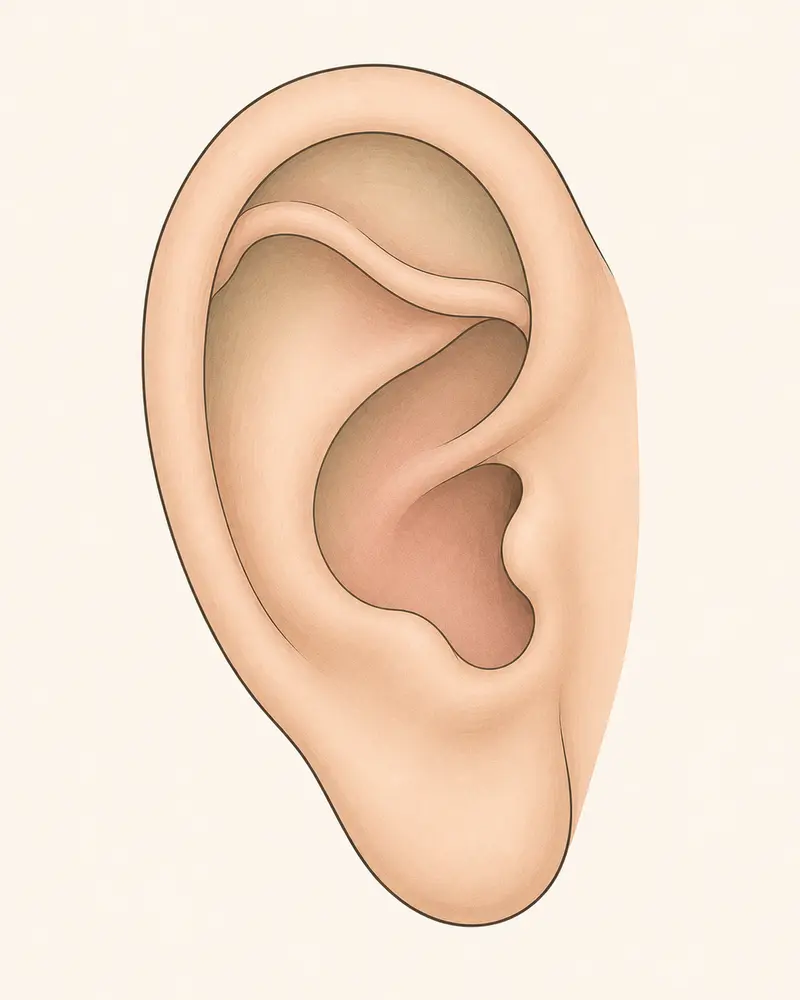
Toku Fit ear placement illustration with selectable lobe and cartilage locations
SELECTED PLACEMENT

Earlobe

6–8 weeks or longer

Published ranges are estimates; each person can take longer to heal.

Browse all placements
Ear
Face
Nose
Torso

APP’s published ranges are general professional estimates, not personal clearance to change jewellery. Healing differs between people; ask your piercer to assess readiness. Source summary: APP Procedure Manual, “Piercing Healing Times”.

PIERCING AFTERCARE · START HERE

How do you clean a new piercing?

Keep aftercare simple: follow the written instructions from your piercer, and use NHS advice if you are worried about infection.

Read the guide

Wash your hands before touching a piercing. Aftercare advice can differ by source and placement, so follow the instructions given for your piercing and ask your piercer if something is unclear. Avoid improvising extra products or routines based on social media.

When to get health advice

The NHS advises urgent GP advice or help from NHS 111 if a piercing is swollen, painful, hot, very red or dark, producing blood or pus, or if you feel unwell. Do not remove jewellery from a suspected infected piercing unless a doctor tells you to.

This is general information, not a personal aftercare plan. A retailer cannot assess an individual piercing remotely.

Sources · NHS: Infected piercings · Association of Professional Piercers: Aftercare

JEWELLERY & FIT · MEASUREMENT GUIDE

Piercing sizes: what do gauge, length and diameter mean?

Gauge describes thickness; bar length and ring diameter describe other dimensions. Knowing a jewellery measurement does not assess your anatomy.

Read the guide

Gauge describes the thickness of the part that passes through the piercing. In common gauge systems, a higher number usually means a thinner piece, so check the millimetre measurement for the exact item.

Length and diameter

Bar length measures a straight or curved bar; ring diameter measures across a hoop. Check the product diagram to see how each measurement is defined, and compare like with like.

Toku Fit compares a known jewellery piece. It does not measure anatomy, assess a piercing or show where to pierce. Ask a qualified piercer to assess individual fit.

Source · Association of Professional Piercers: Jewelry for Initial Piercings

Keep exploring

Ear piercing types: lobe, helix, tragus, conch and morePIERCING GUIDES · PLACEMENT OVERVIEW

Learn the common names for lobe, helix, forward helix, flat, tragus, conch, rook and daith placements. Ear anatomy varies, so an in-person professional assessment is needed to discuss whether a placement is suitable for you.

Sources · Association of Professional Piercers: Picking Your Piercer · Piercing FAQ

Can you sleep on a new cartilage piercing?HEALING & AFTERCARE · EAR PIERCINGS

Professional aftercare guidance advises avoiding direct pressure on healing cartilage. Sleeping on it can cause irritation and may shift the piercing’s angle. There is no single date that applies to every piercing; ask your piercer if pressure is unavoidable or the area is worsening.

Sources · Association of Professional Piercers: Aftercare · NHS: Infected piercings

When can you change your piercing jewellery?JEWELLERY & FIT · HEALING GUIDE

A calendar date alone cannot confirm that a piercing is ready for a jewellery change. Healing varies by placement and person. Ask a qualified piercer to assess the jewellery and healing, especially if a change or downsize is needed before full healing.

If you think the piercing may be infected, follow current NHS advice. Do not remove jewellery unless a doctor tells you to.

Sources · Association of Professional Piercers: full healing-time chart · NHS: Infected piercings

Oral piercings and gum health: what did a systematic review find?PIERCING GUIDES · RESEARCH SUMMARY · REVIEWED 30 SEP 2026

A 2024 review included eight studies from 2007 to 2022, analysing 408 people with tongue or lip piercings. The authors reported possible effects on some periodontal measures, while noting that the evidence base is limited and mostly observational. The findings do not mean every person will develop a dental problem or prove jewellery alone caused every difference. For personal concerns, speak with a dental professional.

Research · Difloe-Geisert JC et al., International Journal of Dental Hygiene (2024) · PubMed record · DOI

How long do different piercings take to heal?HEALING & AFTERCARE · TIME ESTIMATES

APP’s published chart ranges from 6–8 weeks or longer for some placements (including earlobes, septum and tongue) to 6–9 months or longer for cartilage, conch, daith, rook, tragus, navel, cheek and surface piercings. Nostril: 3–4 months or longer; lip: 2–3 months or longer. Choose a placement in the visual guide above for the full list. Every range can be longer, and none is personal clearance to change jewellery.

Sources · Association of Professional Piercers: Piercing FAQ · NHS: Infected piercings

Which jewellery materials suit a fresh piercing?MATERIALS & RESEARCH · QUICK GUIDE

Quick take: for a new piercing, ask first about documented implant-grade titanium. Then match the material to your sensitivity, the placement and the jewellery design. “Hypoallergenic” by itself is not a material specification.

MaterialWhat it can offerWhat to check
Implant-grade titaniumLightweight, nickel-free option; a strong starting choice for fresh piercings and people concerned about nickel.Ask for the exact standard: ASTM F-136 or F-1295, ISO 5832-3, or commercially pure ASTM F-67.
NiobiumNickel-free metal option; can be anodised to create colour without a surface coating.Ask that the piece is niobium throughout, smoothly finished and suitable for the placement.
Solid goldCan be suitable in a fresh piercing when correctly made; offers a precious-metal option.Choose solid 14–18k, nickel- and cadmium-free gold from a reputable maker. Avoid plating, fill and vermeil.
SteelCan be considered when the exact implant-grade alloy and nickel-release compliance are documented.“Surgical steel” is too vague. Ask for ASTM F-138 or ISO 5832-1 evidence. Nickel-sensitive customers should discuss alternatives with their piercer.
Platinum or lead-free glassCan be appropriate professional options, including for some healed placements.Confirm the exact material, construction, smooth finish and placement suitability with a qualified piercer.

Keep these out of a fresh or unhealed piercing: plated, gold-filled, vermeil or coated jewellery; sterling silver; acrylic or unknown plastics; and any piece with an unknown alloy, rough finish or unverified grade. Coatings can wear and silver can tarnish.

Fit and finish matter too: ask for a smooth, well-polished surface, the right size and shape for that placement, and secure construction. Internally threaded or threadless jewellery avoids external threads passing through the channel. No material guarantees a reaction-free result.

Sources · Association of Professional Piercers: Jewelry for Initial Piercings · UK REACH, Annex XVII, entry 27 (nickel release limits) · NHS: Contact dermatitis causes

Nickel release testing: what can a jewellery report tell you?MATERIALS & RESEARCH · TESTING GUIDE

A report applies to the sample, test method and conditions it names. Nickel content and nickel release under test conditions are different questions. Check the product and sample, material and finish, method and version, report date, and whether that method falls within the laboratory’s current accreditation scope. A result does not automatically cover every finish, batch or product from the same brand, and is not a universal guarantee of suitability.

Sources · BSI, BS EN 1811 · UK Government, REACH overview

Piercing, water and infection control: what does UKHSA say?HEALTH GUIDANCE · UKHSA · REVIEWED 30 SEP 2026

A 2024 UKHSA briefing for cosmetic piercing businesses discusses Pseudomonas aeruginosa and water or water-based solutions in professional infection prevention, in relation to ear-cartilage perichondritis. It is professional guidance, not a consumer aftercare checklist or diagnosis tool. If you are concerned about symptoms, use current NHS information and contact an appropriate health service.

Sources · UKHSA briefing · 25 September 2024 · NHS: Infected piercings

Cartilage vs earlobe piercings: what did a 2026 survey find?RESEARCH, EXPLAINED · SURVEY FINDINGS & LIMITS

A 2026 survey analysed 9,016 ear piercings reported by 3,270 respondents. Respondents reported at least one complication in 40.2% of cartilage piercings and 25.4% of earlobe piercings. These are figures from this study’s respondents, not universal rates or an individual forecast. The survey was anonymous and recruited through University of Iowa email addresses, so its sample and self-reported answers limit how widely the results can be applied.

Research · Ziegler JP et al., The Laryngoscope (2026) · PubMed record · DOI

Reviewed 30 September 2026. Research and guidance can change. This Journal is general educational content, not medical, dental, aftercare or legal advice. It cannot assess an individual piercing or product. Source links open the original publisher’s page.